Entity timeline
Catalyst over time
Project Catalyst, the community innovation-funding process drawn from the treasury.
207 mentions, Jul 2019 to Jul 2026 · 8 supportive 2 critical 0 neutral
Marked moments
- criticalCatalyst and the treasury historically overfunded infrastructure and underfunded utility and experiences, leaving little money for Cardano's KOLs, content creators, or interface builders.Mar 2026
- criticalCatalyst's feast-or-famine cannot replace an annual budget, and the on-chain treasury should not sit like Smaug on a pile of gold in a competitive industry that must spend to grow, while acknowledging the Foundation does good things and its staff are good people.Dec 2024
- supportiveRebuts the no-top-down-support point: Catalyst distributed 25 million across 300 ventures, and what the poster really wants is a pile of money to astroturf, which Bitcoin and Ethereum never had at the start.Apr 2024
- supportiveArgues Cardano's spread of stake pools and Catalyst funded research make it resistant to government or corporate capture.Apr 2022
- supportiveAsks what the scam is when Catalyst is the largest decentralized organization with over a billion dollars funding 150-plus ventures, a great data point for decentralized governance.Sep 2021
- supportivePraises Project Catalyst's growth hacking effect as Cardano's secret sauce.Feb 2021
- supportiveCredits Cardano's experienced team, peer-reviewed research, and treasury and Catalyst governance as differentiators rewarded by markets.Jan 2021
- supportivePraises Catalyst as a self-governing innovation engine and ties it into Goguen's developer acquisition strategy.Jan 2021
- supportiveDefends the Cardano Effect podcast's funding request, calling public scrutiny of a large ask a sign that Catalyst governance is working.Oct 2020
- supportiveDefends the Twitter response to Catalyst voting criticism, insisting the process improves every cycle.Jun 2020
 6:52
6:52 Binance wanted NIGHT on Binance Smart Chain, so the years-old OneChain bridge, a Catalyst-funded Chinese bridge, moved Cardano native tokens to BSC.
 9:22
9:22 IO deliberately pivoted to a venture studio, so subsidized things like Catalyst and the legacy Blockfrost infrastructure are being shut down or spun out.
 3:28
3:28 Without Catalyst style funding organizations, everyone bum rushes the treasury as a piggy bank, and projects like Tap Tools and JPEG Store went out of business.
 12:33
12:33 The budget would include funding organizations, from Draper and a sovereign wealth fund to Catalyst, modeled on the NSF, DARPA, and IARPA.
 24:41
24:41 Asks who will save the failing projects when the Cardano Foundation cannot even restart Catalyst funding and the ecosystem is at the NCL.
 29:52
29:52 Closes that Cardano, Midnight, and Blockfrost with Catalyst exist to liberate people from a dystopian hellscape, a call for unity and a reminder that X is not reality.
8:29 Every decision is controversial, like transitioning Catalyst to the best-funded entity with community consent despite historic disagreements.
5:57 Decentralizing requires bringing new blood in so differences become pragmatic compromises, as with Catalyst, the node diversity workshop, Intersect, and the Pentad.
 37:18
37:18 He has been building up the stack, making infrastructure cheaper, diversified, and standardized via Project Catalyst and node workshops, and that 2026 is the last year of expensive infrastructure.
4:19 Catalyst and the treasury historically overfunded infrastructure and underfunded utility and experiences, leaving little money for Cardano's KOLs, content creators, or interface builders.
critical Says Catalyst overfunded infrastructure and underfunded utility and creators.
 2:17:17
 Jokes about an Aiken ambassador funded via Catalyst, noting Aiken powered the Atrium profile, one of the best contracts of 2025.
 13:00
13:00 Treasury and Catalyst funding should pay for baseline features, new features, and certification together, not just a feature set.
 52:21
52:21 An RFP takes 3 to 12 months of paperwork, and layering it onto Catalyst's burden just makes the same people you were already funding jump through hoops.
 3:30
3:30 Uses Circle as an example: much code is written for Circle to operate on Cardano while Circle preserves that integration's intellectual property, just as a Catalyst grantee can keep its IP.
2:40 Frames three ownership models: no one, the old age of Catalyst grants where IP was not recovered; everyone, a special purpose vehicle that holds and monetizes IP back to the treasury; or you decide, a loan or paid company.
 1:45:50
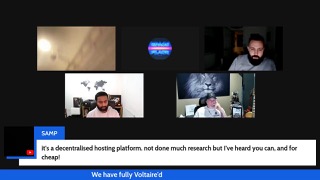
 The panel turns to treasury withdrawals as the coming drama, noting the roughly 200 million ADA a year being pulled is comparable to Catalyst, but auditing and performance tools are needed to plug holes.
 17:40
17:40 The Foundation entered Catalyst to prove low participation and used 180 million ADA to disrupt it, and asks who helps builders reach the next level if not Catalyst, the budget, grants, or venture capital.
 16:06
16:06 Catalyst's feast-or-famine cannot replace an annual budget, and the on-chain treasury should not sit like Smaug on a pile of gold in a competitive industry that must spend to grow, while acknowledging the Foundation does good things and its staff are good people.
critical Says Catalyst's feast or famine funding cannot replace an annual budget.
12:16 The on-chain budget is where permission is needed, and while it does not matter to him personally, it hugely affects loyal builders who work 80-hour weeks unpaid without fair venture capital, grants, or Catalyst funding.
10:01 The Foundation is in Catalyst, has DReps, and will vote on the constitution and budget, and that his three years of dealing with it were unpleasant, agreeable to his face while strange things happened behind the back, like its own constitution a week early.
 32:51
32:51 The second task is an annual budget that leaves no one behind, since many work 16-hour days for free and Catalyst is a glass of ice water in hell, and the third is electing the full constitutional committee, after which IO steps back from on-chain governance.
20:36 The ecosystem needs adult supervision more than another dev company: training DReps and growing on-chain voting participation like Catalyst, agreeing that 180 million ADA should not tip scales against tens of billions.
 29:49
29:49 The constitution grants no special provisions to IO, the CF, Intersect, or Catalyst, so they live or die by effectiveness, and the community can defund Intersect or Catalyst, though the CF can only be excluded since it has its own treasury.
17:14 Funds move to institutions and entities like Catalyst, whose continuation DReps decide, since a rejected budget returns to committee and competing budgets converge, funding or sunsetting Catalyst.
 16:52
16:52 Making the Roger Ver video the day before while taking notes on the paper, and recaps community events, a Catalyst gathering of 100-plus in Barcelona and a hackathon in Toulouse.
 46:38
46:38 Thanks the Cardano community for enduring shredded VC decks, exchange rejections that will not list native tokens, a new programming model, and repeated Catalyst rejections, promising a day when it gets easier.
 3:54
3:54 Rebuts the no-top-down-support point: Catalyst distributed 25 million across 300 ventures, and what the poster really wants is a pile of money to astroturf, which Bitcoin and Ethereum never had at the start.
supportive Rebuts a no-support claim, citing 25 million distributed across 300 Catalyst ventures.
 26:00
26:00 The two-person team plans to apply for Catalyst Fund 11 to continue, including surveying university students globally about Cardano awareness.
23:45 Hoskinson calls it a self-improving flywheel and suggests a Catalyst proposal, offering cryptographic tools like AnonCreds and verified NFTs to prove set membership and uniqueness without doxing.
 16:57
16:57 Cardano's democratic structure bootstraps more sophisticated governance like non-stake-weighted and quadratic voting, but first must replicate hard forks, protocol parameters, treasury withdrawals beyond Catalyst, and a catch-all vote.
 15:18
15:18 Points to over 50 workshops in 2023 and SanchoNet as the whole reason for the effort, learning from the Catalyst experiment, Polkadot's OpenGov, and Tezos governance.
 23:42
23:42 The movement is now collective rather than about one person, and the 2024 decentralized budget will flow tens of millions to a diverse set of people, with Catalyst repositioned as an innovation agency bootstrapping the next thousand dapps.
 26:59
26:59 Marlowe hits mainnet in March 2023, Plutus V2 has much better tooling, surface-Plutus-plus-core becomes the formal-methods path, and high-accessibility languages need grants from the MBO, Catalyst, and the Foundation, which funds Aiken.
 26:52
26:52 2023 will be insanely active, with a Cardano Summit presentation called The Age of Voltaire harnessing the community through CIPs, a constitution, and the MBO, and Basho giving Voltaire a Mithril and Hydra application to bring Catalyst voting on-chain.
 1:22:56
 Debunks the claim IOG owns all seven Cardano keys, describing the shift to a members based system.
 13:23
13:23 He told Harris at Catalyst he wants three to five more community CIP editors and 10 to 15 full-time engineers paid directly by Cardano as a pillar of Fund 10, funded through Catalyst once bootstrapped.
4:48 Track four is Voltaire; Catalyst is about to surge with a voting center and DReps, and its permissioned side chain needs linking to mainnet, overlapping the Basho agenda.
 1:14:17
 Argues Cardano's spread of stake pools and Catalyst funded research make it resistant to government or corporate capture.
supportive Credits Catalyst funded research with making Cardano resistant to capture.
20:45 Welcomes multiple independent and Catalyst funded rollup research efforts, noting IOG's own Sonic SNARK paper and library work.
17:18 Acknowledges criticism for tweeting about Catalyst funded projects he has ties to, but says he wants to platform as many builders as possible.
 10:45
10:45 Milkomeda already showed a third-party approach while Mamba is the canonical abstraction, and future chains like the Catalyst voting network running the Jormungandr code will become Cardano side chains enabling hackathons in both Plutus and Solidity.
4:34 Self-determination requires an inclusive bureaucracy legitimized by community voting and endowment through Catalyst, and thanks over 500 people across organizations for building Cardano.
 2:34:13
 Admires Ethereum's layer two rollup research and confirms Catalyst funding and Hydra tail protocol work chasing the same space.
2:30:47 Frames connecting Catalyst and Mamba to the mainnet as the 2022 priority in the Basho and Voltaire eras.
 51:21
51:21 Bletic previews decentralized intellectual property: opening up the Drunken Dragon universe, making all art Creative Commons, open-sourcing the game, and using Project Catalyst for on-chain governance so anyone can contribute like contributing to Star Wars, the world's biggest Dungeons and Dragons experience.
 36:11
36:11 Side chains like the Yella, Catalyst, or EVM chains run optimized protocols with thousands of TPS via permissioned BFT whose permissioning comes from the decentralized main chain.
 1:03:22
 The open-source project will have a marketing pillar with accountable people funded perpetually by Catalyst after everyone is dead and buried.
 11:28
11:28 The Mastering Cardano book author fell ill so they will find a new one to publish in 2022 as a capstone text like Mastering Bitcoin or Mastering Ethereum, plus Catalyst-funded tutorials.
7:40 Two million assets have been issued since May 2021 with possibly 10 times more by year end due to the NFT revolution, many becoming DeFi tokens funded via Catalyst and the ISPO model.
 26:47
26:47 Getting started with Cardano is easy through Catalyst and IdeaScale, and that it is bizarre Silicon Valley VCs have not heard of it, amazed to find real unpaid people when shown.
6:09 Publications are hitting in February via the Eurocrypt, Crypto, and CCS venues, with about two million people and a growing velocity of scale through Catalyst.
 42:35
42:35 Anyone wanting to represent their project to Cardano to go through Catalyst, where the community itself vets proposals through dialogue.
28:18 Makes the case for using Catalyst treasury funds for marketing rather than handing money to a single custodian, contrasting it with EOS's troubled treasury.
 31:13
31:13 Every DeFi provider wants to DAOify to remove custodial organizations, and Cardano's Catalyst tools will eventually work for all two-million-plus native assets, rebutting the ghost-chain claim.
6:09 Wants a frank conversation with the Catalyst community to make funded applications commit to certification at level one, two, or three, so Cardano avoids the 10.5 billion dollars lost elsewhere hiding behind decentralization.
 47:24
47:24 Voltaire favored the enlightened monarch over parasitic aristocracy or mob-rule direct democracy, so Cardano builds a social laws of physics, an open-source decentralized monarch with Catalyst participants as the advising philosophers.
28:20 Wants a bespoke incubation and acceleration pipeline with entrepreneurial training like MIT, CMU, or Stanford programs, graduating people ready to submit a Catalyst proposal to build on Cardano.
27:34 Predicts hundreds of people by end of 2022 working for Cardano paid by Catalyst, submitting grants to be ambassadors, marketers, developers, or entrepreneurs in residence.
17:34 The wallet needs a multi-currency interface, hardware wallet center, third-party plugins, and an identity center carrying Prism, with the voting center interfacing with Catalyst plus a dapp connector, enabled by nine months of architecture work with Daedalus and partial delegation.
8:23 Wants a regulatory bend to future-proof next-generation DEXes and to bring Voltaire people, since Catalyst provides DAO capabilities and the native asset standard lets any asset reuse ADA's governance mechanics to run a DAO.
 1:20:32
 Points a mental health research team toward Catalyst and IdeaScale rather than direct outreach.
1:17:52 Points builders wanting to help with documentation or SDKs toward Catalyst and Cardano Foundation funding, both holding over a billion dollars.
1:10:16 Catalyst's governance as a service, via the native multi asset standard, lets Cardano dApps skip Ethereum's DAO bootstrapping problem.
37:37 Non programmers can help by joining the upcoming education tracks and getting involved through Catalyst.
33:28 Cardano's own zk research, Sonic and Plonk with Galois, positions it well for a future Catalyst funded rollup or zk wave.
22:25 Advises an aspiring builder to submit ideas through Catalyst IdeaScale to get started.
17:24 The cFund has returned 189 percent and Catalyst funded over 300 projects in 2021, projected toward roughly 2000 in 2022.
13:46 Mamba side chain specifications are underway, to be used by Djed, Catalyst and an EVM side chain running in Ouroboros BFT mode.
 21:22
21:22 Crypto is an open-source collective effort to chase objective truth, and the one thing they must get right is decentralization: fundraising via Catalyst, control via Ouroboros, governance via the hard fork combinator and CIP process, and research embedded in thousand-year-old, culturally-neutral universities.
 9:07
9:07 Cardano was built with a decades-long outlook for fair, open solutions across scalability via pipelining and input endorsers and governance via Catalyst, the largest decentralized organization with over a billion dollars to distribute, and could become the back-end of nation-states running elections, property registers, identity systems, and the biggest preserver of human rights.
 27:58
27:58 Claims ADA issued through Catalyst will outvalue nation state money because it resists inflation and manipulation.
27:28 Points to Catalyst's self funding treasury growing to 1.4 billion dollars in 24 months.
19:25 Announces open source governance scaffolding and a Catalyst funded meta government coming in 2022.
12:37 Parallel release cycles for the PAB, wallet backend, Hydra, Catalyst, and Mamba sidechains.
 32:15
32:15 Over 300 independently funded Catalyst projects exist with no commercial relationship to IOG.
7:15 Reports Catalyst fund 6 funded over 150 proposals, its largest round yet, with fund 7 doubling to 8 million dollars starting in November.
4:43 Catalyst becoming fully recursive so the community sets its own funding parameters each round.
 9:33
9:33 Argues open infrastructure inevitably attracts both good and bad actors, and that community curation, regulation, and Voltaire era tools like Catalyst and ambassadors are the answer.
 22:12
22:12 Asks what the scam is when Catalyst is the largest decentralized organization with over a billion dollars funding 150-plus ventures, a great data point for decentralized governance.
supportive Calls Catalyst a great data point for decentralized governance, rebutting scam claims.
7:43 The Chimeric Ledger design running in full on Catalyst via Jormungandr and a lightweight version for staking rewards on mainnet, with partner Mune building an emulated account layer that could enable a follow-up paper merging the two systems.
 17:31
17:31 Compares it to the transistor taking years to beat the vacuum tube then never looking back, believing extended UTXO will out-compete the account model with infrastructure funded by Catalyst's nearly billion dollars.
 22:54
22:54 The synthesis of Catalyst's wisdom of the crowd and DCF's domain expertise encapsulates how Voltaire will work in 2022, the final part of the original agenda, with formal specifications open on GitHub.
22:08 Invites people to the Summit September 25th to 26th with four tracks on utility, impact, adoption, and governance, the governance track covering bottom-up Catalyst and top-down DCF Consortium Decentralized Funding.
3:52 Rebuts Ethereum-space claims that UTXO cannot scale, citing the 2018 Chimeric Ledgers paper on unifying UTXO and account cryptocurrencies, already implemented in Catalyst's Rust Cardano, with UTXO more scalable than harder-to-shard accounts.
 1:00:09
 Cardano moves faster than Bitcoin's cautious, one shot pace while preserving value, evolving inclusively through Catalyst with universities and app developers shaping the system.
55:57 Shares team numbers: over 500 people at the company, 200 plus full time on Cardano, 12 partner development companies, and a still growing billion dollar Catalyst fund, with Cardano360 and the September 25 conference as the next checkpoints.
38:04 Announces four vendors will present formal verification of smart contracts at the conference, and outlines one more hard fork combinator event in 2021 before EVM, Yellow and Catalyst side chains, including a complex DEX, turn on in 2022.
4:56 Catalyst is built directly into its own chain because its complex voting protocols would be too costly as ordinary smart contracts.
4:23 Introduces the three computation layers covered in the talk: Plutus extended UTXO, an EVM side chain, and Yellow, plus Catalyst as a governance chain.
 31:17
31:17 Holding ADA gives a Catalyst and CIP vote, so they have a moral obligation to ensure the crowd is wise and not co-opted by demagoguery and propaganda, making these tools essential for Cardano and a free society, a passion for 2022 as developers free up, knowing they got it right when polarization gives way to deliberative quiet thinking closer to the truth.
 40:26
40:26 The communication problem is a big 2022 pursuit, and Catalyst with 33,000 unique wallets and thousands of weekly conversations somehow converges to good decisions, a microcosm of the macro.
25:11 Asks why critics feel so passionate rather than ignoring Cardano, insisting every paper, the countries entered, and the 154 Catalyst-funded projects must be corrupt because they decided Cardano is bad.
15:12 Small things like a better voting system for your club via IdeaScale and Catalyst grow to enormous things in 5 years, the point of the Cardano movement from first principles.
 1:28:15
 Points to growing decentralization as proof against megalomania: stake pools run the ledger, Catalyst keeps expanding.
 12:55
12:55 A treasury takes some inflation into a decentralized account to pay for commercialization, innovation, and growth beyond security, as with Cardano Catalyst funding 50-plus projects every 6 to 8 weeks with 600 million dollars.
 15:16
15:16 Critics miss the sheer magnitude of the community with thousands of real developers building and training, plus Catalyst's Fund 5 with a quarter million voters casting twice the prior votes.
 13:10
13:10 Agrees that Catalyst proposals should be more public and suggests a short weekly video roll up of project progress.
9:08 To get involved building on Cardano through Catalyst's IdeaScale portal, cardano.org, Stack Exchange, and the Cardano Forum.
3:51 Highlights Catalyst's rapid funding growth, more than 50 funded ventures per round, alongside the expanding Plutus Pioneers and SPO Pioneers programs with over 3000 stake pools.
 3:49:04
 Funded Catalyst proposals need an accountable auditor as a real world counterparty, since a blockchain itself cannot hold anyone responsible.
3:48:08 Details the partnership with IdeaScale that hosts Catalyst proposal discussions, plus a new incubator and accelerator being built by chief of staff Tamara Hassan.
3:46:01 Cardano's treasury, now holding over a billion dollars of ADA from protocol inflation, is controlled by the community through Catalyst rather than by himself or the foundation.
3:17:02 Argues Cardano thought harder about governance than Polkadot, building Catalyst and Voltaire so every ADA holder can participate instead of leaving governance for later.
 25:16
25:16 Thanks the community for saintly patience enduring cult accusations and slander while building space buds and applications and bringing over 30000 people to Catalyst.
24:30 The engineers persist because they see the faces of users who are not the privileged but people begging for new systems, and they built Catalyst, a funding engine with over half a billion dollars ready to build the next Microsoft, Facebook, or Google.
 1:42:00
 Closing, he has visited nearly 50 countries and now speaks six languages including Lunda, Bemba, and Nyanja, and is excited by the bottom-up ideas flowing on Catalyst.
 2:08
2:08 Eight development companies are gearing up for the Plutus testnet, and that Catalyst and Voltaire are both still moving forward.
 7:42
7:42 The progressive government in power listens to Elizabeth Warren and Bernie Sanders, and if Elon Musk were seen dumping Dogecoin on poor kids, that inequality narrative would be the catalyst to bring in a regulator, even on perception alone.
 29:11
29:11 The DCF brings focused directed effort to keep the platform competitive and enter new markets, complementing Catalyst's organized chaos of hundreds of millions invested across thousands of community projects.
21:35 Proposes DAO as a service so any Cardano dapp needing voting reuses the Catalyst and Voltaire voting systems by assigning voting rights to a token, adding preference and quadratic voting as a reusable library.
20:03 Turns to governance, unifying Catalyst which handles treasury with Voltaire which handles protocol updates through 2021 into 2022, formalizing the HFC system under Voltaire with a bicameral voting model, liquid feedback, and expert ballots.
15:22 The side chain CIP adds Ethereum and Yella compatibility, brings Catalyst into the system, and enables moving between permissioned and permissionless, having joined the Hyperledger Foundation to propose a permissioned Cardano.
14:36 In 2021 they will propose a CIP, likely the first the community votes on, for an HFC to update monetary policy with incentives to run EVM, Yella, and Catalyst side chains, drawing on Cosmos and Polkadot parachains.
11:33 Turns to side chains where the main chain CSL is settlement and side chains CCL are computation like EVM and Yella, wanting Catalyst and WebAssembly as side chains with rules to add and retire them plus an economic model to pay for maintenance.
 29:00
29:00 With a large subscriber base and Twitter feed he will become the podcast, interviewing Cardano and Catalyst projects like People of IOG so builders can share their passion with an audience.
25:58 Newcomers nothing here is new and, after a surge of podcasts explaining the DCF, smart contracts, third-generation crypto, and Catalyst, says he will become far more selective going forward.
16:10 The ecosystem is decentralized with over 2000 stake pool operators and 16000 Catalyst voters shaping k, a0, minimum fees, and resource consumption as Catalyst consumes the governance stack, with tools improved via the EU Horizon 2020 grant with IBM and Guardtime, Governance Alive, and accelerators.
5:25 Catalyst has over 16000 participants and he wants 100000, and in two days 100 percent of blocks will be made by community-chosen stake pool operators, so he will advise on governance and pools but never on investment.
 1:48
1:48 Highlights hundreds of Project Catalyst funded proposals and praises the community's ideas.
 20:55
20:55 No one built a decentralized governance stack as fast, with Catalyst growing from 50 to over 20000 members in six months before the UI even launched, plus peer-reviewed research, working with 12-plus companies like Quviq, Runtime Verification, Well-Typed, Tweag, and Vacuum Labs.
11:00 Points to the month-end Cardano 360 and Catalyst Fund 3 with Fund 4 coming to fund hundreds of dapps, inviting developers to join Plutus Pioneers, use the EVM devnet or Yella devnet, or await mainstream-language paths.
1:33 The company is oversubscribed and turns away deal flow it cannot handle, while Catalyst already has six NFT marketplaces, stablecoins some already deployed on Ergo, oracles, and DEXes seeking funding before smart contracts even ship.
 54:46
54:46 A viewer their AR glasses NFT GPS assistant idea sounds like a Catalyst proposal waiting to happen.
41:47 Reports Catalyst Fund 3 voter numbers rising sharply despite a heroic voting configuration snafu that will get fixed.
38:28 Update that Cardano Rust is still maintained in part by Emurgo, with the Yeoman team, now folded into Catalyst, closest to carrying it forward.
 1:33:04
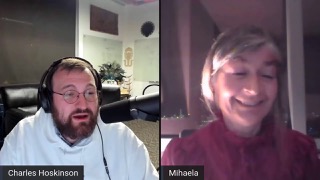
 At IOG her title is strategic partnerships leader, but she calls herself an impact catalyst bringing high-impact niches like the UN project, renewable energy, and the SDGs.
 37:18
37:18 Calls his relationship with Ben Goertzel and SingularityNET great and offers to back their Catalyst bid.
24:41 Challenges the community to build an open marketplace like OpenBazaar on Cardano via Catalyst.
7:03 Cites 10,000 people now active in Catalyst as a milestone for the month.
6:04 Calls Catalyst a lifestyle, not a passive vote.
5:46 Plans to redirect commercial deals the company can't service into Catalyst proposals.
5:29 Catalyst's deal pipeline growing faster than IOHK can service it.
 25:14
25:14 Catalyst will let hundreds or thousands wake up and work for a cryptocurrency, impossible with Bitcoin, so experts, politicians, artists, and scientists paid for credible passions will flock to Cardano within 12 to 24 months.
 23:08
23:08 Hardware wallet support for Catalyst voting is in progress via a Vacuumlabs firmware update, likely landing in Q2.
11:24 Cardano isn't talking directly to the Indian government but leans on foundation council member Manmeet Singh's local expertise, with Catalyst funding local entrepreneurs in closed markets.
 17:10
17:10 The Catalyst team gained more Rust developers and oversight to accelerate the governance work.
14:24 A giant hackathon is planned where Catalyst recipients showcase progress, creating roughly 200 speakers.
12:22 A full time journalist will be hired to interview and tell the stories of Catalyst funded projects.
12:01 Catalyst fund four holds one million dollars, funds keep growing, and 20 to 30 entities should get funded this round.
 59:36
59:36 Points aspiring contributors to Project Catalyst and IdeaScale to propose and fund their own work.
27:56 Praises Project Catalyst's growth hacking effect as Cardano's secret sauce.
supportive Praises Project Catalyst's growth hacking effect as Cardano's secret sauce.
 51:26
51:26 Announces a 400,000 dollar hardware wallet budget extension covering Trezor, Ledger and U2FA support.
 1:47:10
 Signal a shift toward channeling more of this collaboration through Project Catalyst, including direct foundation involvement in Fund4.
1:39:54 Closes the segment noting the Catalyst treasury opening up funding to the community as a mutual learning process between IOG and builders.
1:25:33 Credits Cardano's experienced team, peer-reviewed research, and treasury and Catalyst governance as differentiators rewarded by markets.
supportive Credits treasury and Catalyst governance as differentiators rewarded by markets.
1:04:22 Praises Catalyst as a self-governing innovation engine and ties it into Goguen's developer acquisition strategy.
supportive Praises Catalyst as a self-governing innovation engine.
1:00:32 Showcase the Ouroboros over Arena pitch: a Japan-based stake pool and relay project funded through Catalyst Fund2.
58:49 To get involved: register on IdeaScale to browse and support Catalyst proposals.
58:08 Frames Catalyst as a series of experiments open to any ADA holder or anyone with a good idea for the ecosystem.
54:13 Reveals Project Catalyst Fund3 doubles the pot to half a million dollars worth of ADA, up from Fund2's quarter million.