Topic timeline
Community & Media over time
1,525 entries across all AMAs, in chronological order, showing the first 150.
 1:49
1:49 Open with a fresh shave and a selfie for Twitter, thanking a crowd of 400 people that far exceeded expectations.
 0:03
0:03 Kick off an interactive livestream, taking audience questions instead of a scripted update video.
1:05:19 Details repeated complaints to Twitter about missing verification while impersonator bots run ether giveaway scams.
1:07:31 Warns about Telegram impersonators soliciting ADA for fake beta tests and describe how to verify his real identity via PGP.
1:08:38 Recalls abandoning Cardano's Slack communities after impersonator bots ran wallet scams there too.
1:55:42 Announces time for one final question of the stream.
2:07:19 Closes the two-hour stream thanking viewers and signing off.
 1:47
1:47 Opens a surprise AMA, explains the format and that he will stay as long as the questions stay interesting.
11:03 Plans dedicated foundation investment in community management for China, South Korea and Japan.
1:07:46 Debunks trolling claims that he personally owns 40 percent of ADA or hides in 15 countries, noting IOHK's actual stake is around 8 percent.
1:10:29 A paid disinformation industry that spreads fake news to damage competitors, urging people to demand evidence before believing claims.
1:12:30 Explains why he stopped reading Twitter replies after mob pile ons and now treats the platform purely as a broadcast channel.
1:45:15 Names the community's loyalty and the surprising academic readership for its research papers as the most surprising part of the Cardano journey.
1:47:58 Admits he was not prepared for how harsh online criticism can feel and describes having to build psychological defenses against it.
1:49:48 Revisits the MetaMask Twitter incident, explaining he was only asking for a private support channel rather than acting entitled.
1:51:29 Pushes back on criticism of his travel and food photos, saying he shares meals because confidential meetings themselves cannot be discussed.
1:53:39 Closes the AMA thanking the community, balancing gratitude for surprising encounters against the toll of harsh criticism.
 1:26
1:26 In Israel to present papers at Eurocrypt with chief scientist Aggelos Kiayias, the first time the conference has come to the country and the first IOHK visit.
 5:42
5:42 Opens up about the emotional toll of constant Twitter and Reddit criticism as he's become more globally known.
18:08 Responds to Dogecoin founder Jackson Palmer's dig about his LinkedIn, clarifying he did not finish his additive number theory PhD.
2:05:36 Wraps the AMA, acknowledging it turned out more philosophical and less Cardano focused than usual, and thanks viewers for tuning in.
 1:25
1:25 Plans to work through news items first then answer over 200 questions submitted to the AMA thread plus live audience questions.
2:36 Details a multi pronged plan to rebuild community management by salvaging existing structures and standing up a new team at IOHK.
3:44 Highlights Sebastian's new 14 lecture educational series and plans for infographics explaining Cardano concepts.
4:18 Plans a multi host Cardano podcast modeled on Let's Talk Bitcoin, with hosts from Emurgo, IOHK, and the Guardians.
4:51 Wants to spotlight grassroots adoption stories, like a fan planting a gingko tree and a Spanish hotel accepting ADA.
5:52 Calls for civility toward Foundation figures Michael Minelli and Michael Parsons even amid the commercial dispute.
7:08 Praises the Guardians of Cardano for pushing transparency and accountability while asking critics to tone down hostility.
15:57 The Guardians of Cardano privately investigated Foundation affiliations and sent a list of questions before going public.
17:24 Recounts how foreign media in Korea and Japan misreported the Foundation dispute, forcing corrective statements to protect the ADA price.
1:09:59 Considers publishing a regular community report with key metrics on Cardano network health and growth.
1:20:04 Praises the Joe Rogan and intellectual dark web long form podcast format for reaching audiences mainstream media ignores.
1:22:50 Wants to save a major podcast appearance for after Shelley and smart contracts ship so he can point people to working software.
1:36:35 Responds to a longtime critic who still calls Cardano a scam even after Shelley, joking about their history together.
 8:02
8:02 Introduces Plutus Fest as the first public showcase of Plutus after sixteen language revisions, including a mock chain for testing contracts.
8:44 The two Plutus Fest tracks: one for language experts from Glasgow and St Andrews, one for developers on Plutus, Marlowe and the extended UTXO model.
11:04 Celebrates the launch of the Cardano Effect podcast, credited to Philip, Sebastian and Rick.
11:42 The Cardano Effect format: a topical episode and an interview episode each week, modeled on shows like Epicenter.
1:27:27 Concludes Haskell was necessary pain he'd choose again, then thanks everyone and signs off until the next AMA.
 15:34
15:34 Admits the Cardano Foundation failed to fund community management programs in 2018, including a proposed Ambassador Program and regional Cardano Hub concept, both blocked by the previous chairman and now unblocked under new leadership.
16:51 Points to existing grassroots meetup groups already thriving in places like Iran, Colombia, Eastern Europe, Ukraine, South Korea, and Japan.
18:56 Addresses recurring FUD and misunderstandings from 2018, including baseless claims meant to worry the community.
34:57 Points to nearly a hundred consecutive weekly Mantis livestreams on the IOHK YouTube channel as proof of the project's transparency.
 29:43
29:43 Closes with community development plans: a Cardano Ambassador Program, a hub program, the growing Cardano Effect, and hopes for Korean and Japanese copycat podcasts, wishing a Merry Christmas and Happy New Year.
 1:28:26
 Details plans to train 10,000 developers worldwide through open-source Haskell courses run in Athens, Barbados, and an all-women's class in Ethiopia.
 10:50
10:50 The stake pool taskforce of over a thousand signups feeding a structured, translated Q&A process into a future FAQ.
12:52 Partnering with Marcus and Robert, who ran the first Plutus training course, to turn Q&A answers into educational material.
37:40 Confirms a discount for IOHK Summit tickets paid in ADA, built through a custom Eventbrite payment bridge.
39:15 Defends the summit ticket price as a break even cost to fly out the whole company, pointing to competitor speakers, workshops, and a crypto puzzle hunt with an ADA prize.
59:36 Brushes off delisting rumors as trolling, joking that Cardano is never getting delisted or going bankrupt.
1:41:40 Looks forward to facing Ethereum Denver's online trolls in person to see if they repeat their Twitter insults to his face.
1:48:42 Dismisses anonymous critics as people upset their price dropped after doing no work, comparing them to investors mad Amazon stock took eleven years to recover after the dot com peak.
 2:23
2:23 A lot of the Twitter hostility is self inflicted, and old relationships from Ethereum and BitShares cascade into fanboyism with real money behind it.
4:47 A community member named Marcus is running the protocol on a RockPro, a Raspberry Pi on steroids costing $70 and drawing about four watts, so a global scale financial system could run on roughly 4 kilowatts.
6:09 Someone tattooed the Cardano logo on his arm so the logo can never change, though in hindsight the go to market strategy and the architecture would be done differently.
18:16 The endless when Shelley questions miss how complex this is, and the line about Cardano being the first trillion dollar cryptocurrency was about a self sustaining economy, not a price prediction, before it was quoted dishonestly.
36:53 Developer education runs three ways, third parties who already built a Plutus course backed by a Cardano Foundation grant with localized materials, and IOHK's own education department under Lars Brunjes training 23 developers from Ethiopia and Uganda in Addis Ababa in Haskell and Plutus.
1:06:25 The IOHK Summit is April 17 to 18 in Miami with a Plutus hackathon, 26 workshops from zero knowledge proofs onward, a Cardano 2020 keynote, Tangem wallets for attendees and a puzzle splitting an ADA wallet's 12 recovery words across four puzzles.
1:08:00 Summit guests include Christian Cachin and Jonathan Katz, plus scaling debates with the Prism team about their protocol and related work.
 2:30
2:30 The mother of all community initiatives was the Cardano Guardians emerging during the Cardano Foundation trouble and pressuring Michael Parsons to step aside.
3:40 The stake pool task force lets the community consolidate the recurring staking questions and answer them in one place, and over a thousand people signed up in a week and a half.
 5:49
5:49 Brushes off a heckler calling Daedalus slow with a one word reply.
22:04 Debunks the media claim he promised a trillion dollar cryptocurrency within a year, explains what he actually meant by a self sustaining Cardano economy.
23:39 Calls out Chico Crypto as a shock jock who baits guests for views, says he will not reward that with an appearance.
41:06 Lays out a multi pronged plan to train over 10,000 Plutus developers via a MOOC, channel partners, and an Emurgo program in India.
50:17 Declines a proposed panel with Kadena's Will Martino and Kyle Samani after Samani publicly called him a criminal.
51:42 Marvels at how global the Cardano community has become, citing chance encounters with fans in Hawaii and at an Australian airport.
1:02:09 Snaps at a critic questioning IOHK's peer review process, pointing to Crypto, Eurocrypt, NDSS, and CCS venues.
1:06:42 A friendly rivalry with Tone Vays despite Vays insisting Cardano is a security and a scam.
1:09:36 Counters a claim that Tone Vays cannot use GitHub by pointing to IOHK's roughly 70 developers, 24 with PhDs.
 0:08
0:08 Opens from the Turkish Airlines lounge stuck in a flight delay, deciding to do a surprise Sunday AMA with no proper microphone.
8:04 A Munich summit with Lars and Polina will build the scaffolding for a Haskell functional programming MOOC, considering Coursera like the Scala course, EDX, Udacity, or Udemy, refined across three teaching cohorts.
26:32 Jokes he spotted Craig Wright scowling through the airport and drinking wine at 11am, and took a photo to crowdsource whether it is really him.
32:01 Cardano sells no merchandise but the Crypto Supreme store run by an associate stocks t-shirts and paper wallets, and yes fans recognize him in public across more than 30 countries.
35:49 All their training material is Creative Commons Attribution and free to commercialize with citation, offering PowerPoints, YouTube videos, and the recorded Ethiopia lectures.
47:26 Teases his friend Gareth Hayes, CTO of Emurgo Hong Kong, who gave him one of the first Cardano Ledger devices.
 0:06
0:06 Opens the AMA live from Colorado after apologizing for stream software trouble.
53:58 Would love a Joe Rogan appearance but wants to wait until Shelley ships so the pitch is proof instead of promises.
1:12:17 He will go on Ivan on Tech's show once his packed travel schedule frees up.
1:12:46 Laughs off being called evil by some YouTube critics and confirms he is a Yoroi fan.
1:15:22 Likes the idea of naming community meetups after Fight Club.
1:20:32 Plans a Brazil trip for engineering director Bruno Barbieri and notes the team includes cryptographers like Mario Larangeira.
 0:06
0:06 Opens the post IOHK summit AMA, recorded just before heading to Mongolia.
0:43 Lists summit speakers from Stephen Wolfram and Rudy Rucker to Wyoming state representative Tyler Lindholm and Caitlin Long, plus officials from Georgia and Mongolia.
7:54 Sets the AMA agenda: a post mortem on the summit, then the Shelley delay questions and the roadmap.
12:24 Pushes back on Reddit claims of no meaningful announcements, pointing to a likely coordinated flood of new single post accounts.
37:04 Calls for more empathy and patience within the community, saying most people involved aren't trying to scam anyone.
40:43 Opens the live AMA, responding to a question about whether the event signals panic inside the company.
1:10:19 Admits he should tone down his aggressive Twitter style and mention EOS and Dan Larimer less often.
1:30:44 Explains why he invited Stephen Wolfram to the summit, calling Wolfram Alpha a natural oracle source for smart contracts.
1:31:59 Rudy Rucker, an original cypherpunk from Hal Finney's era, brought an outside perspective to the summit.
1:49:26 Closes the AMA, recaps summit media coverage, and thanks the community for its patience.
 0:03
0:03 Opens another AMA to make up for the last one being cut short by the roadmap and Shelley announcement.
1:10 Weighs turning the internal Haskell course used in Ethiopia into a public online course.
4:29 Reflects fondly on a guest at the IOHK Summit.
25:39 Praises Joe Rogan's interview style of genuine listening over a pre scripted agenda.
27:06 Contrasts open ended podcast conversations with traditional journalism's pre planned angles.
 0:05
0:05 Broadcasting from Ulaanbaatar in Mongolia to answer five questions collected from Reddit and Twitter about Shelley delays, engineering headcount and Atala.
7:34 Calling Atala a distraction or a bait and switch is wrong: the choice was building something in house guaranteed to interoperate with Cardano or bolting on Fabric.
 0:07
0:07 Broadcasting from New York after Mongolia, following Consensus and the Polymath event and the confusion about how Polymath relates to Cardano.
 0:04
0:04 Opens the video to recap Consensus 2019 and preview his response to backlash over an earlier comment about auditable back doors.
1:50 Recounts security guards heavy-handedly checking badges in the basement sponsor rooms and threatening to have Polymath's own team removed for trespassing.
6:30 Calls out crypto press for sloppy reporting on a Mongolia MOU and offers journalists a pro tip: contact the company for comment before publishing.
15:11 Wraps up his Consensus media appearances, including BlockTV, CNBC Africa, and Forbes' Rachel Wolfson, compares the event unfavorably to a larger, cheaper conference from 2018, and mentions running into Tone Vays with openness to appearing on his show.
17:53 Addresses the backlash over his auditable back doors comment, calling the Monero community's interpretation of it insane.
20:06 Monero's community, spearheaded by founder Fluffy Pony on Twitter, twisted the comment into a false claim that China and the United States have backdoors into Zcash and Cardano, and clarifies the original comment was about Polymesh, a regulated ledger for broker-dealers, not Cardano at all.
 3:51
3:51 The Cardano stake pool best practices Telegram group has about 1290 members, and surveys are going out to gauge technical acumen and willingness to run test scenarios through June.
11:26 Join the Cardano stake pool work group on Telegram, fill out the survey, and a focus group will get DevOps tutorials on building from source and running configurations that try to break the software.
17:49 Cardano Docs is being completely redone with technical writers also documenting the Rust client, and the developer channel and stake pool task force will be the first readers giving feedback.
19:21 Two Udemy courses on Marlowe and Plutus have more than 2000 students each, a Plutus book comes in July, and an O'Reilly book may follow in Q4 or Q1.
22:24 Aiming for more regular communication because the testnets will move quickly, with a whirlwind of messaging, telegram and email before things are ready for mainnet.
 0:02
0:02 This interview was requested as text by a Korean WeChat group of 499 female entrepreneurs in blockchain, so it became a video instead.
40:34 Smart contracts only became real to people when MakerDAO and similar projects hit market on Ethereum, and now the University of Wyoming teaches an undergraduate blockchain course that built a voting system in Solidity, with one student founding a hemp supply chain company.
41:45 Closing thanks to the Korean group of female entrepreneurs, with a trip to Korea planned in July and an open door for more interviews.
 1:28
1:28 The questionnaire also decides what education content gets made, from Nix and git to reporting an issue on GitHub.
7:01 Eastern Europe already has a strong presence, with Roman Oliynykov's team in Kharkiv plus friends in Kyiv, Bulgaria, Romania and Hungary.
17:22 In Japan from June 8th to 13th, speaking in Tokyo at a digital world conference on an Asahi invitation, plus a meetup.
26:56 For a complete beginner: the Coursera fundamentals of computing series from Rice University in Python, then Harvard's free CS50 on edX.
27:46 After the basics go functional through the thousand page Haskell Book or SICP, and consider Regis University's online degree or Udacity nanodegrees.
30:42 Learning to run a node from scratch will come via YouTube videos or a Udemy style course, shaped by repeat questions from the stake pool task force.
46:09 Answering Anthony, who calls him a phony posting memes instead of shipping Shelley, he asks what else he should be doing while running 200 people and signing agreements with heads of state.
48:41 Critics can never be satisfied: eclipse Ethereum and they ask about Bitcoin, eclipse Bitcoin and they ask about Facebook coin.
50:06 The MetaMask do you know who I am tweet is still used as an indictment of his character, mostly by the Ethereum and EOS ecosystems.
52:43 Anything involving money or politics draws relentless criticism, and people keep claiming IOHK sells ADA even though the address is on its blog and unspendable.
55:21 Outrage culture means one offensive remark can cost you your job, which is what happened after the do you know who I am tweet written from Vietnam.
1:06:14 Complains that supposedly objective outlets like CoinDesk blacklist IOHK, ignoring its labs at Tokyo Tech, Edinburgh and Athens while covering Stanford's Ethereum lab.
1:07:29 IOHK is negotiating a currency for six million people and it draws no coverage, but every leader has their New York Times and his is CoinDesk.
1:08:19 Traditional media matters far less now: Twitter, fifty thousand people on Reddit, telegram and these AMAs reach further, plus national press in Ethiopia, Mongolia and Georgia.
1:12:07 Invited to keynote the Crypto AM event in London on June 25th, right after saying he should stop traveling.
1:24:15 Being accused of disgracing Cardano by talking about mushrooms while the roadmap slips is just more of the same noise.
1:33:32 If ADA were the new world order then CoinDesk would cover it, and yes he does own a John Deere tractor.
1:34:32 Artists can tweet him a link and he will connect them with IOHK's director of design Richard Wild, which is how the Shelley and IOHK summit posters came about.
1:44:52 Reading the unkind words in the chat, he just pities people who must treat everyone in their life this way.
1:54:50 Wrapping up with thanks for a great AMA and a promise to do these more frequently.
 4:31
4:31 Previews an upcoming Cardano Effect episode with David and commits to a monthly or six-week AMA cadence with advance notice, plus product managers doing their own AMAs.
47:45 Closes by thanking the community for roadmap feedback and encouraging continued engagement on Reddit and Telegram.
 8:20
8:20 Announces David will host a Friday AMA covering the release and taking community questions around 3pm Eastern.
16:08 Outlines the keys to smart contract adoption: training developers through Udemy courses, refining the DSL model, and courting the huge untapped Lisp, Clojure, Haskell, and OCaml programming community.
 1:44
1:44 Highlights community excitement running self nodes, including a 13 year old, sparking questions about VRF and staking certificates.
20:32 Begins explaining that marketing has to be staged, starting with the question of what Cardano is actually selling right now.
21:21 The Byron era marketing goal of building a community and liquidity, citing a top ten ranking and 30 plus exchange listings.
21:36 The Shelley decentralization stage requiring a consolidated white paper from 40 plus research papers and a brand refresh.
23:06 Plans to work with third party marketing firms and YouTube educators to create blog posts, videos, and Udemy explainer content.
40:40 Rebuts the fabricated claim that Cardano was marketed as a Japanese gambling platform in 2015, calling it fiction with no supporting evidence.
43:10 Defends the ICO's transparency, citing 9,914 participants, a published audit, and demographic data showing few elderly buyers.
53:15 He's never met Joe Rogan but wants Cardano's staking, smart contracts, and Africa work further along before going on the show.
 5:06
5:06 All of the progress is visible in the GitHub repos, Reddit and Twitter feeds, and David will start regular community roll-ups every four to six weeks with an AMA, ideally taking questions live.
12:33 A hackathon at the University of Wyoming in Laramie with 500 plus people and the governor will feature Plutus and Marlowe workshops, and a Plutus book is already published on Amazon with another to follow, bringing functional programmers in to issue currencies and build dApps.
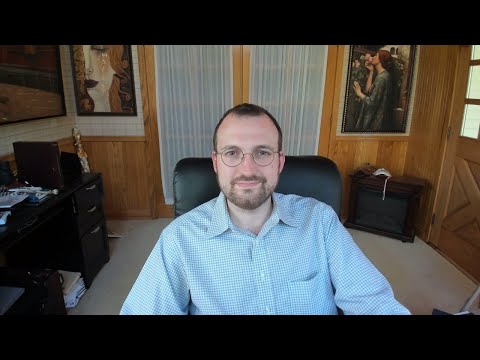 0:10
0:10 Taking a break from Twitter, Facebook and Reddit for a week-long annual vacation that includes a full physical checkup and a few days fishing.
3:22 Anyone who reads absence from a social platform as an exit scam is lying and is part of why cryptocurrencies struggle for mainstream legitimacy; staying put instead of traveling also means losing the roughly 50 pounds gained on the road, with Shelley the number one priority and IOHK here to stay, so block or mute the liars.